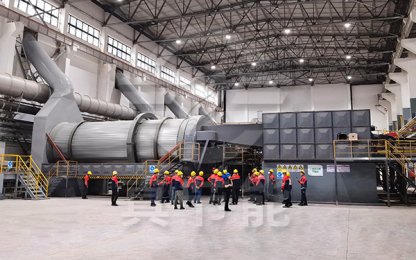
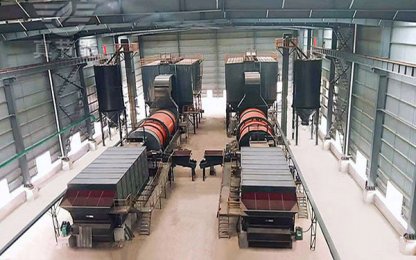
All types of industrial sludge dryers generate dust-laden flue gas during operation. The concentration of toxic substances in exhaust varies greatly depending on the sludge type being treated. Direct discharge of untreated exhaust will severely pollute the workshop air, degrade the working environment and cause respiratory harm to on-site operators. For this reason, every complete sludge drying production line must be equipped with dust removal equipment to filter dust and hazardous gas for compliant emission.
ZJN mainly configures bag dust collectors as standard dust treatment units for sludge drying lines. Desulfurization equipment can be matched additionally if flue gas contains sulfide substances. The bag dust collector serves as the core barrier for solid-gas separation of drying tail gas, suitable for capturing fine, dry, non-fibrous dust via filter bags.
When dust-laden gas enters the collector, large and heavy dust particles are intercepted and slide down to the ash hopper by gravity. Tiny fine dust adheres to the surface of filter bags, so purified clean gas is discharged. The dust collected in the ash hopper can be recycled for secondary utilization, eliminating atmospheric pollution caused by unfiltered flue gas emission.
Bag dust collectors feature ultra-high dust removal efficiency, especially for fine particles below 20μm, with a purification rate over 99%. Despite moderate procurement and maintenance costs, they play an indispensable role in sludge drying units. Matched with sludge dryers, bag dust collectors effectively reduce environmental pollution and stabilize hot air circulation, further improving the overall drying efficiency of the system.
Key Precautions for Trial Operation of Bag Dust Collectors
1. Verify the rotation direction, rated speed of the fan, and monitor vibration and temperature of bearings during operation.
2. Test actual air volume, pressure and flue gas temperature to ensure compliance with design parameters.
3. Inspect filter bags regularly to check for bag falling, loose openings or abrasion; repair or replace damaged bags immediately once found.
4. Check internal condensation inside the collector to prevent filter bag dampening; monitor the ash discharge system for blockage and corrosion, and troubleshoot in a timely manner.
5. Formulate a fixed ash cleaning cycle. Long-term operation leads to accumulated dust on filter bags, which blocks air permeability, causes gas leakage and even bag rupture. Regular pulse ash cleaning is required to maintain stable dust removal performance.