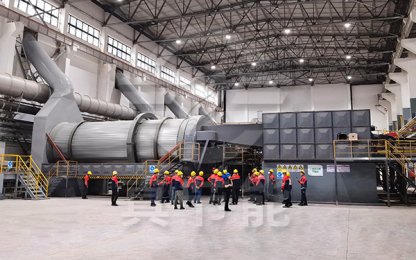
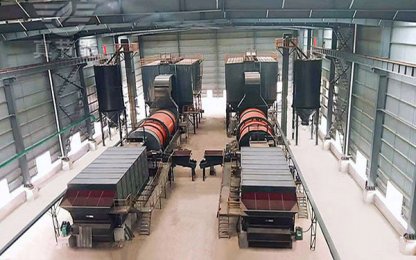
The sludge generated from domestic sewage in conventional wastewater treatment plants generally has a moisture content of over 90%, featuring large volume and difficulty in storage and disposal. Wastewater treatment plants usually carry out sludge thickening to reduce moisture content preliminarily, and the moisture content of thickened sludge is about 60%. This value is mainly affected by sludge properties, thickening agents added, thickening duration and other factors. After thickening, sludge can be sent to mechanical dewatering equipment for further moisture reduction.
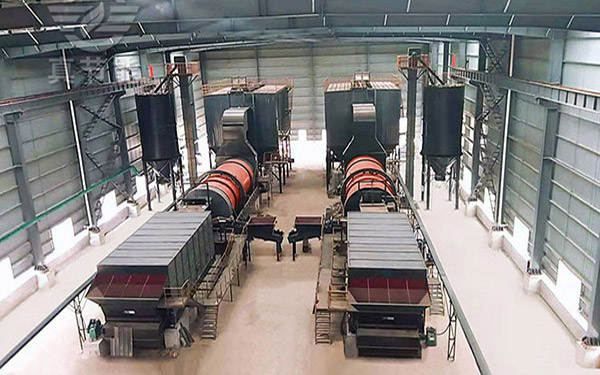
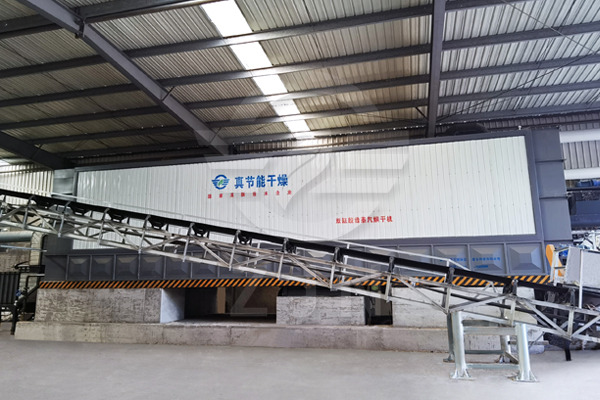
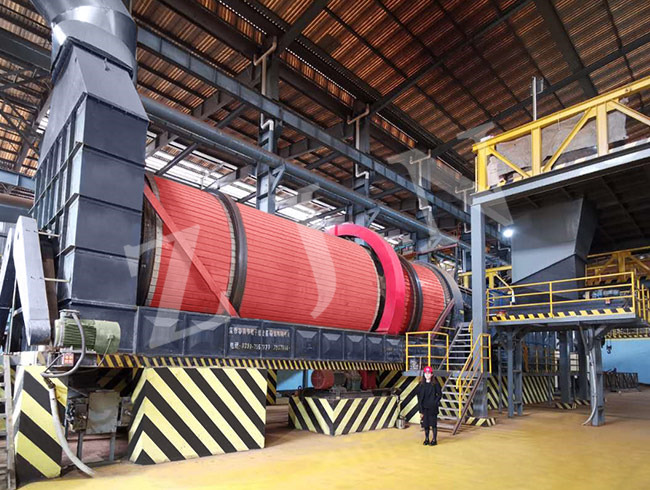
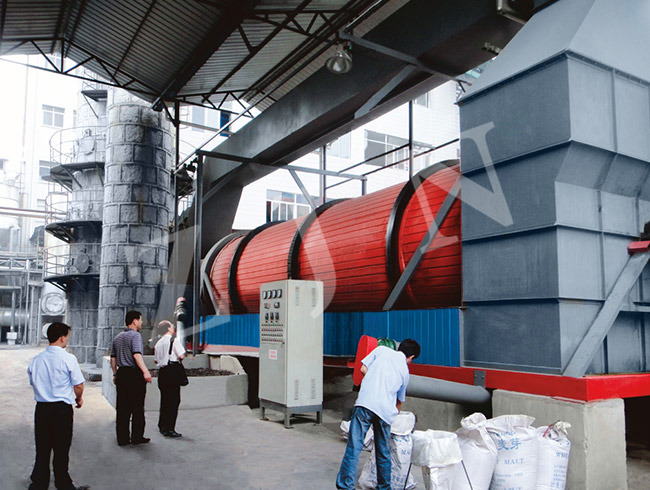
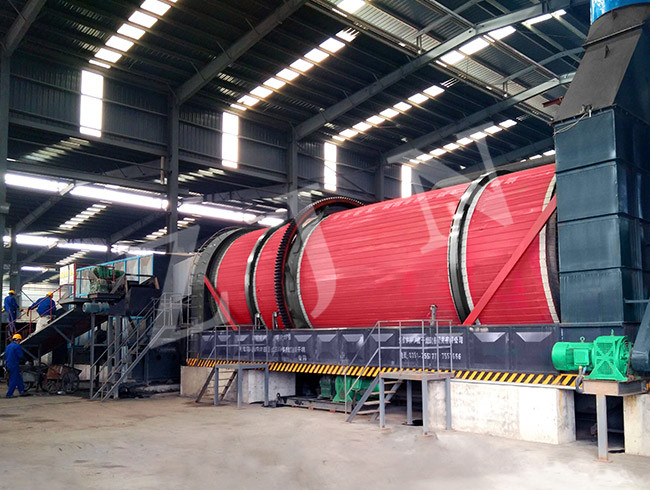
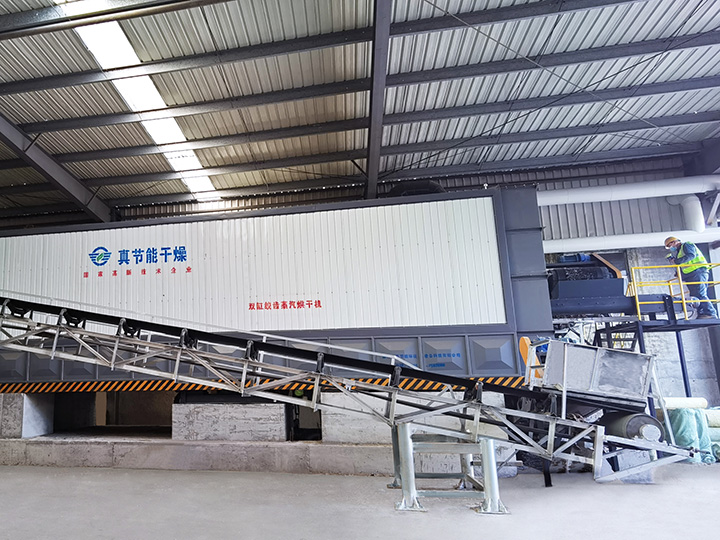
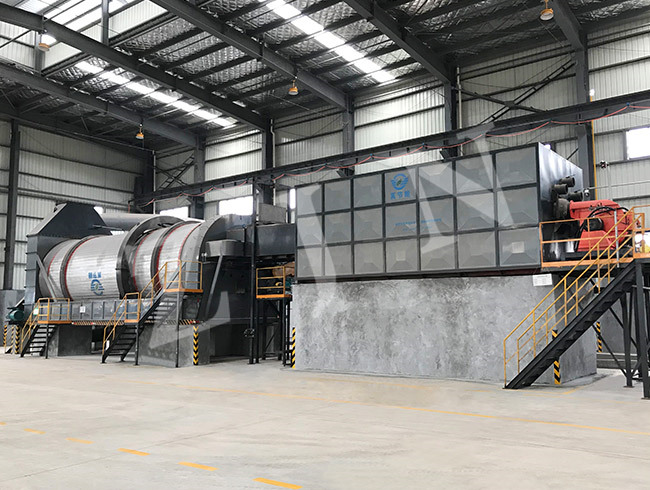
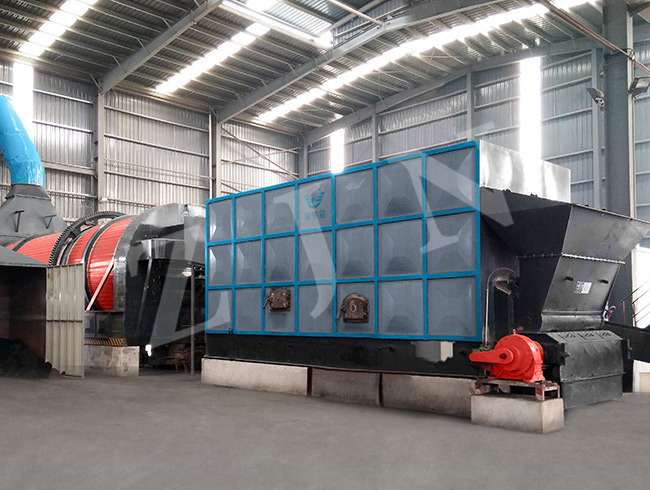
To achieve the goals of sludge harmless treatment, stabilization, volume reduction and resource utilization, a domestic sludge dryer is required. The equipment adopts high-temperature heat transfer to rapidly evaporate moisture in sludge, shrinking the sludge volume to 1/3–1/5 of the original size. It greatly facilitates subsequent transportation, storage and resource reuse of sludge.
Process Introduction of Domestic Sludge Dryer
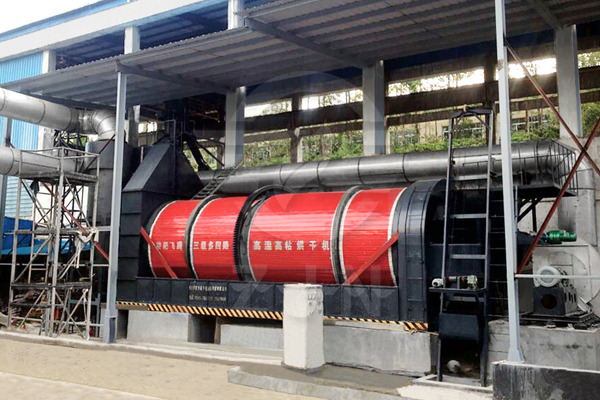
The domestic sludge dryer adopts the proprietary "rotary rake turbulent three-stage multi-loop" drying technology developed by Zheneng Saving. Inside the equipment, the "three-stage forward and reverse lifting flights" and "W+S" material conveying process are applied, which significantly enhances the contact between sludge and hot air. The sludge is kept in an optimal drying state at all times, improving thermal efficiency and working performance, and ensuring uniformly dried sludge with unchanged original composition. Meanwhile, it reduces environmental pollution and brings economic benefits to enterprises. Therefore, the domestic sludge dryer enables harmless sludge treatment and meets the development requirements of low-carbon environmental protection in China.
Features of Domestic Sludge Dryer
1. Low energy consumption. The equipment uses direct heating to realize sufficient contact between sludge and hot air for efficient heat transfer. In addition, an insulation layer is arranged outside the cylinder to greatly reduce internal heat loss.
2. Small footprint. Adopting a triple-cylinder structure, the equipment increases the internal cylinder capacity while shortening the overall length. It can be installed reasonably according to the available site area of users.
3. Wide application range. It can be used in municipal engineering, electroplating, chemical industry, iron and steel, papermaking, printing and dyeing, textile, pharmaceutical, leather, coal and other industries.
4. Simple operation. The whole system is automatically controlled for easy operation. Generally, only 2 to 3 operators are required for the full operation set.
5. Low environmental pollution. The equipment is well sealed to prevent dust leakage during drying. The exhaust gas after drying is filtered, purified and dedusted by dust removal equipment to meet gas emission standards.