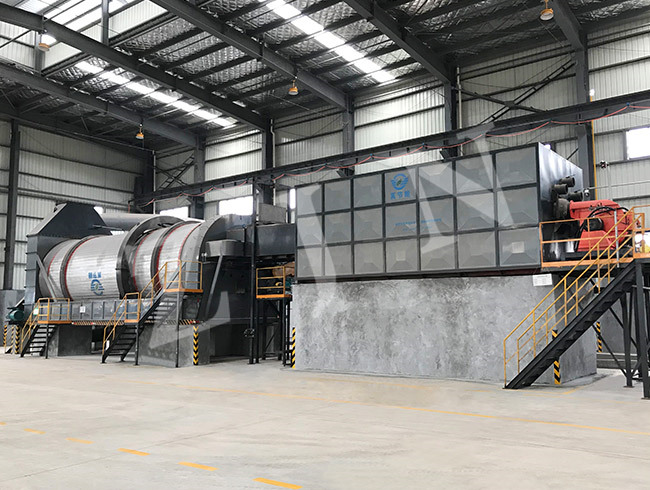
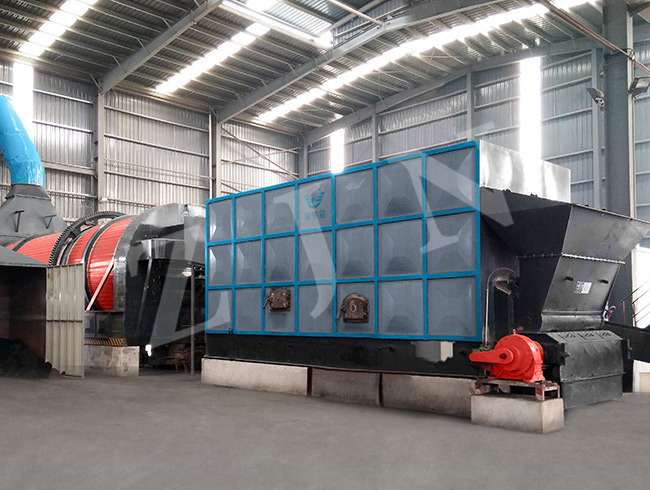
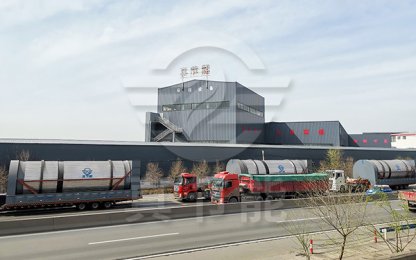
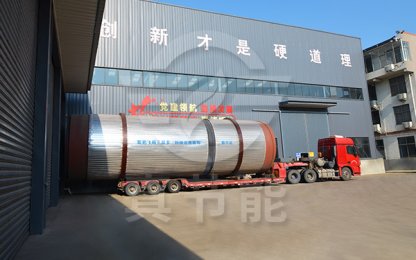
The dryer market features a wide range of drying equipment, leaving many users confused about model selection. To help customers make accurate decisions, ZJN will analyze and compare the two mainstream dryers for electroplating sludge treatment: single-drum dryers and three-pass dryers.
1. Single-Drum Dryer
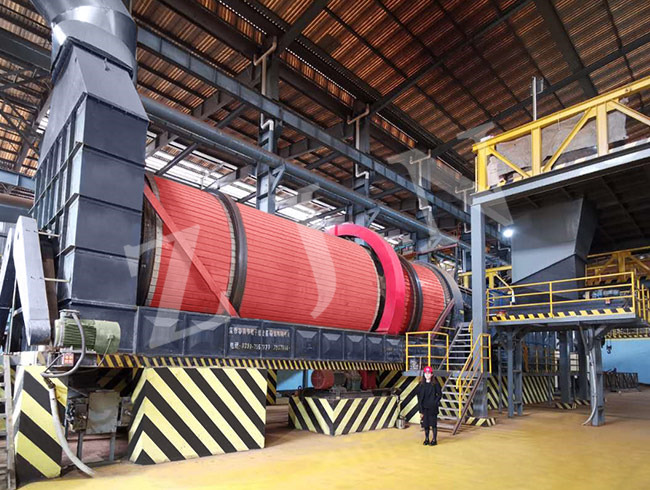
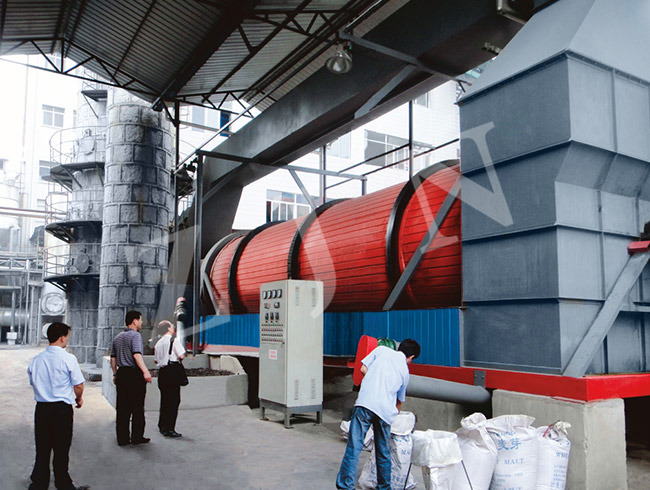
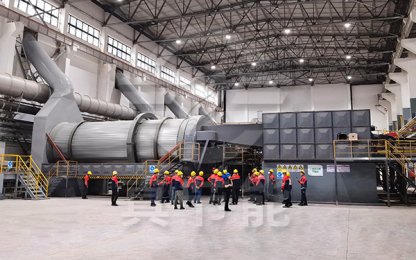
The single-drum dryer features a simple structure with a single cylindrical drying drum. The drum is designed with an inclination larger than the natural repose angle of sludge. Wet sludge is fed from the higher end, while the heat medium enters from the lower end to form countercurrent heat exchange. In some working conditions, the heat medium and sludge flow cocurrently into the drum.
Equipped with internal lifting plates, the machine continuously lifts and scatters sludge, maximizing the contact area between sludge and hot air and improving overall production efficiency. Dried sludge is discharged from the lower end of the drum.
Advantages
It boasts a simple process structure and easy operation, ideal for dewatering and drying high-moisture and moderately viscous sludge.
Disadvantages
When treating high-moisture and high-viscosity electroplating sludge, the equipment delivers low thermal efficiency and poor drum heat preservation performance, resulting in serious heat energy waste and high long-term operating costs.
2. Three-Pass Dryer (Upgraded Based on Single-Drum Structure)
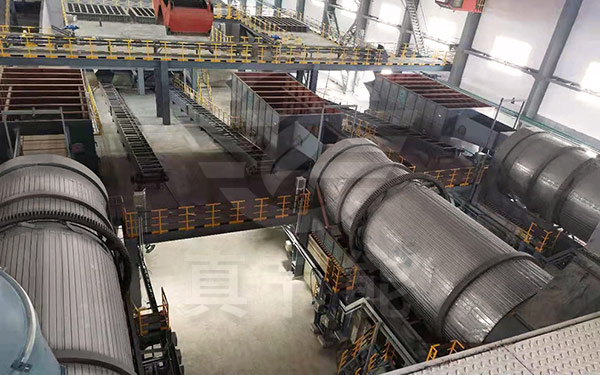
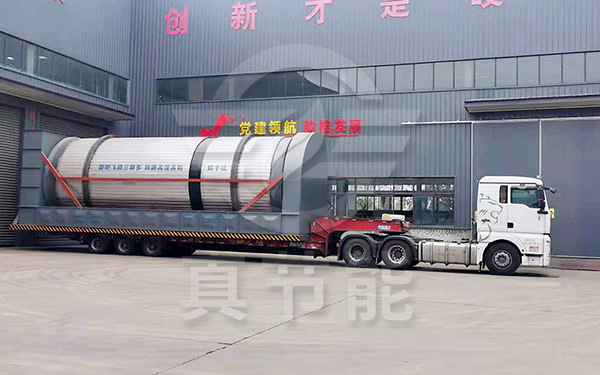
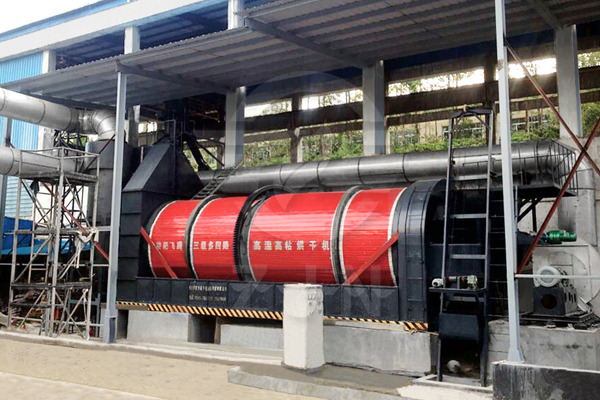
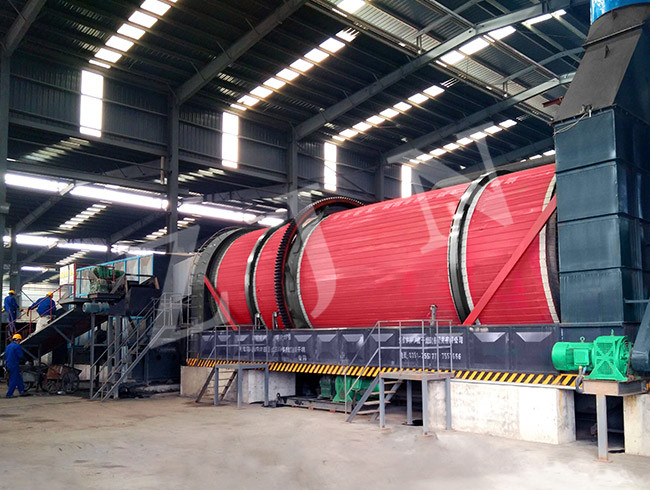
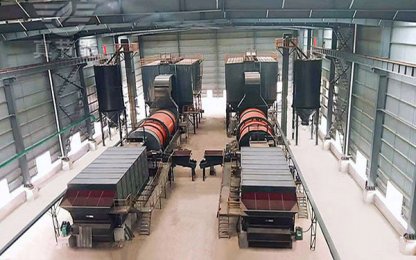
The three-pass dryer is an upgraded version of the traditional single-drum dryer, adopting a nested structure with three cylindrical drums of different diameters. This innovative design expands the effective internal volume while reducing the overall equipment footprint by one-third. The whole drying process is divided into three professional stages to achieve graded and efficient drying.
Inner drum: Built-in crushing and material lifting systems stir and disperse incoming sludge thoroughly. It accelerates heat and mass transfer, speeds up surface moisture evaporation, and effectively prevents sludge adhesion and wall sticking, greatly improving production efficiency.
Middle drum: Adopts countercurrent and swirling drying mode. The reverse flow of sludge and hot air intensifies turbulence, promoting the evaporation of internal moisture inside sludge particles.
Outer drum: Applies alternating and reciprocating drying logic. Specialized material plates realize the operational principle of slow movement for wet materials and fast movement for dry materials. Qualified dried sludge is finally discharged and packaged.
Core Advantages of Three-Pass Electroplating Sludge Dryer
Most enterprises currently choose three-pass dryers for electroplating sludge treatment. Its nested drum structure forms an excellent self-insulation system, effectively boosting thermal utilization rate and production efficiency while ensuring stable and high-quality dried finished products. It significantly reduces energy consumption and achieves more economical long-term operation compared with single-drum equipment.
There is no universal best model for electroplating sludge dryers. Users shall select the most suitable equipment according to actual production conditions, sludge characteristics, site constraints and budget, combined with professional manufacturer recommendations.